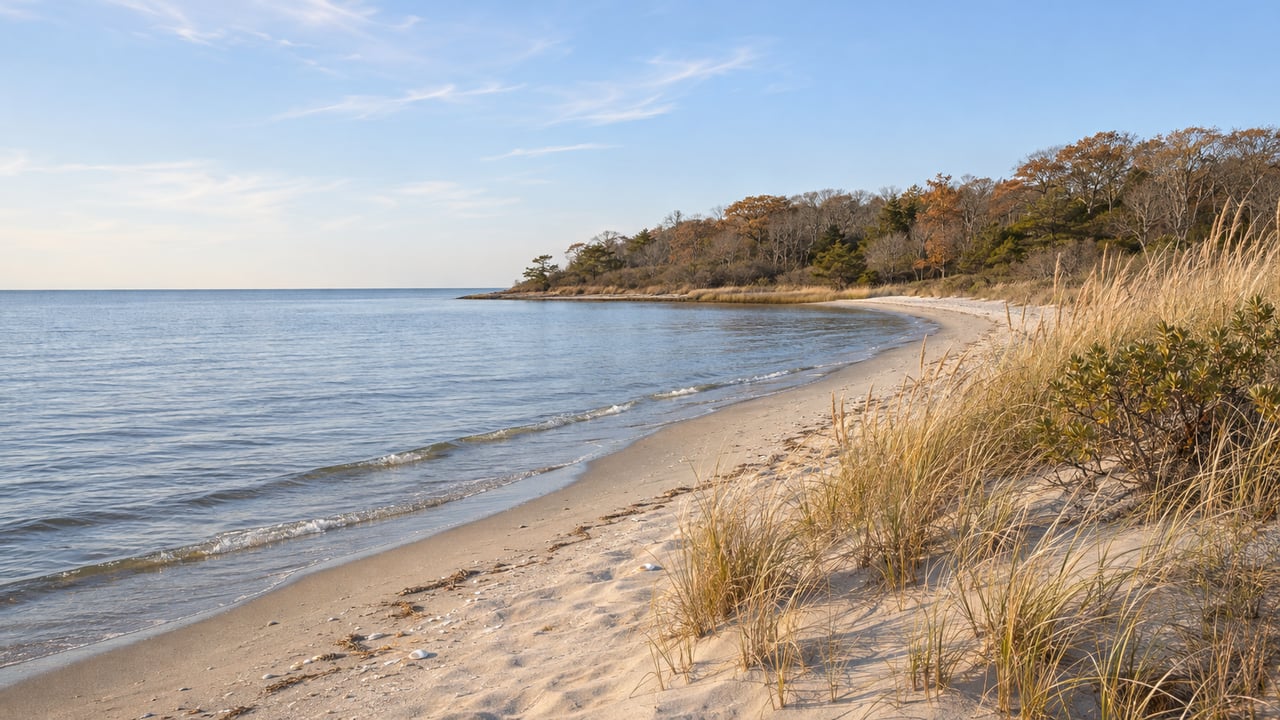
The island in the middle of Lake Lily looks emptier this November than it has in years, and that is on purpose. Cape May Point cleared nearly every plant from it this spring and covered the ground with a black plastic barrier. That barrier is the first of three phases meant to bring back an island that had been slowly fouling the lake around it.
The island stays bare through the winter, and native planting is planned for spring 2027. After that comes the slowest part of the project, which is keeping new native plants alive on an island that Canada geese and swans can walk onto.
What Was Growing There Before
The island had been covered with dense invasive vegetation for several years. According to the borough's update on the Lake Lily Island restoration, that growth kept wildlife off the island and added to the muck in the lake as it decayed. The first plan was selective thinning. Then an inspection found that 90% of the vegetation was invasive, and the plan changed to removing all of it.
Commissioner Suzanne Yunghans explained the connection between the island and the water at a borough meeting last December, as reported by the Cape May Star and Wave:
"The purpose is to eliminate the dense thatch of invasive plants that shed biomass into the lake, which contributes to the muck buildup and increased phosphorus levels. Once the island is cleared, native vegetation can be reestablished, which in turn can increase biodiversity and wildlife habitat improvement."
In the same report, Yunghans described Lake Lily as doing two jobs. It handles stormwater for the town, and it is a freshwater habitat for wildlife. The State of New Jersey owns and regulates the water itself. The borough is responsible for managing the lake, its shoreline, and the island. Clearing the island was a water-quality project from the start.
From a Planned Burn to a Boat Haul
The island got to its current state in several steps, and one of them changed course partway through:
- December 2025. The borough applied to the New Jersey Forest Service for a prescribed burn of the island's invasive growth, to be carried out that winter on a day with suitable weather.
- Early 2026. The burn was canceled because conditions stayed damp. The borough hired a contractor to cut the invasive vegetation down to ground level instead.
- May 20 and 21. A crew removed the debris and roots. Every load went by boat from the island to the street, and Public Works hauled away what the borough's update calls a "massive amount of vegetation."
- After clearing. A black plastic barrier went down over the island to stop regrowth.
- July 21. The Cape May Star and Wave reported that a witness saw the brief EF-0 tornado move into Lake Lily that day, with no other damage noted there. The borough's update says the barrier came through it intact.
- October 10. Dune Day volunteers planted on the beach, at Triangle Park, and along the west side of Lake Lily.
Hauling everything out by boat produced the result the burn was supposed to deliver. It also took the roots, which a fire would have left in the ground.
What the Plastic Is Doing This Winter
The borough's update says the barrier "is doing a superb job." Invasive plants have come back only along the island's outer edges. Mature tree stumps there were too big to pull out, and the plastic couldn't cover those spots well. The borough's plan is to remove the remaining stumps this fall, leaving what the update calls "a blank canvas" for the next phase.
Inside those edges, the barrier keeps the ground bare until planting starts.
The shoreline has its own plan for invasive plants. The September 22 commissioners' minutes say borough engineer Dale Foster is preparing a package of state permits, and Commissioner Yunghans asked to review them with the board. The package includes a Freshwater Wetlands Permit and a Flood Hazard Area permit that would allow mechanical cutting of phragmites and other invasive plants around the shoreline that the borough's volunteer Invasive Patrol team can't clear by hand.
Spring Planting, and a Fence for Birds That Walk
Phase 2 covers design, site preparation, and planting. The borough's update says most of the planning and prep should happen in fall 2026 and early spring 2027. The September 22 minutes put the planting itself next spring. The plan calls for a mix of native plants:
- Nature-friendly shrubs
- Colorful perennials
- Native dwarf tree species
The main risk to the new plants is the lake's own birds. The update names protecting them from geese and other foraging wildlife as one of the challenges of this phase, and it raises the idea of a small temporary wildlife fence around the island. A fence won't stop birds that fly in. The borough expects the waterfowl most likely to do damage, Canada geese and swans, to walk onto the island, and a fence should turn them back.
Getting the plants in the ground doesn't finish Phase 2. The phase ends with an assessment of how well the first native plantings did, which the update says "could take up to a year or more." Phase 3 is ongoing maintenance, with some plants replaced or moved and a "perpetual plan" for managing the island. Even if planting goes well in spring 2027, the island is a multi-year project.
The borough and Friends of Lake Lily are asking residents for input and ideas on the landscaping.
The South End Moves on a Slower Schedule
For the shallow south end of the lake, the borough is still comparing options. At the September 22 meeting, Commissioner Yunghans reported on a review by Souza, who teaches the Rutgers lake management course for New Jersey municipalities. He described the overgrowth of water plants in that part of the lake as hard to fix because the shallow water encourages growth. The minutes recall that during a rainless stretch last June, that end of the lake was "virtually just mud and extensive vegetative growth."
These are the options the borough is weighing:
- Lake mats. The borough tried them this year. Souza called them a good, cost-effective method, but covering the whole area would take many more.
- Dredging. Ruled out because of the cost.
- Herbicide. Annual treatments approved by the state Department of Environmental Protection (DEP).
- Hydroraking. Expected to last three to five years and requires a detailed DEP permit. The estimated cost is $2,500 a day, with about a third to half an acre done each day. One company estimated 20 days for the south end, which works out to about $50,000 at that daily rate.
None of these options is permanent, and the borough is collecting updated quotes. The minutes say fall is the season when hydroraking would disturb wildlife least. If the borough applies for the permit and DEP approves it, the commissioners would still have to decide whether to go ahead and how to pay for it. The earliest possible date is fall 2027.
Souza also pointed to stormwater. Lake Lily is fed by rain through more than 130 storm drains around the borough. He recommended teaching residents about runoff and looking at filter inserts for key drains. What washes into those drains ends up in the same water the island restoration is meant to protect.
Who Pays for the Island, and Who Plants It
Friends of Lake Lily and the Cape May Point Taxpayers' Association are paying for the island project together. The Civic Club donated the black cherry tree for Triangle Park, and the approved Dune Day plan included 29 shrubs at Lake Lily. The commissioners credited Jonathan Westcott with preparing that plan, and the October 13 minutes thanked him for leading the day.
Friends of Lake Lily is a 501(c)(3) nonprofit in Cape May Point, led by president Tom Reilly, that works on conserving the borough's natural resources, especially the lake. Its volunteer "bedfellows" look after the garden beds along West Lake Drive. The group takes donations online or by mail at PO Box 32, Cape May Point, NJ 08212, and can be reached at [email protected].
The borough's update also looks back to 1992, when a community-wide restoration focused on beautifying the shoreline, improving water quality, and reviving the island. More than thirty years later, the island is being cleared and replanted again, this time with a maintenance plan built in so it doesn't fall back to the invasives.
Lisa Bassett has worked in Cape May County real estate for more than three decades. If you'd like to talk about the Point, Lake Lily, or anything else on your mind, Seashore Realty is happy to hear from you. Let's Connect.